Whole-Food vs Processed Breakfast Comparisons
Educational content on nutrient characteristics. No promises of outcomes.
Introduction
Breakfast foods exist across a spectrum from minimally-processed whole foods to extensively processed ready-to-eat products. This article compares nutrient profiles, added ingredients, and compositional differences between whole-food and processed breakfast options commonly available in UK households.
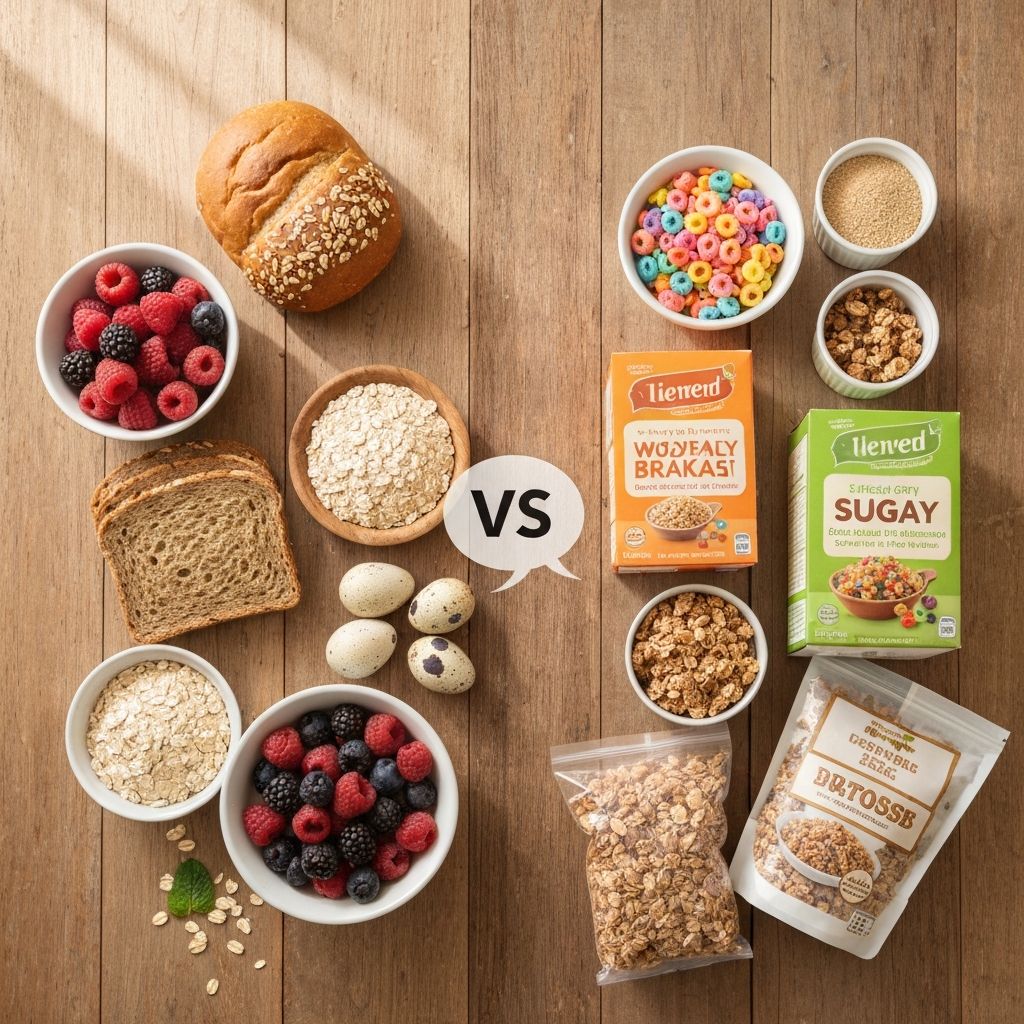
Defining Whole-Food and Processed
Minimally-processed whole foods: Foods that require minimal processing to become edible, such as eggs, fresh fruit, rolled oats, nuts, and wholegrain bread. These foods typically contain a single ingredient or a simple combination of recognisable ingredients.
Processed foods: Foods that have undergone manufacturing processes such as grinding, mixing, cooking, pasteurisation, or the addition of preservatives, sweeteners, and other additives. Examples include ready-to-eat cereals, flavoured yoghurts, and flavoured porridges.
Oats: Rolled vs Instant vs Sweetened Cereals
Rolled Oats (Minimally-Processed)
- Processing: Oat groats are steamed and flattened, requiring cooking before consumption
- Carbohydrate (per 40g dry): approximately 27 grams
- Sugar (per 40g dry): less than 1 gram
- Fibre (per 40g dry): approximately 6 to 8 grams
- Ingredients: rolled oats (single ingredient)
Instant Oatmeal (Processed)
- Processing: Oats are finely ground to reduce cooking time; often heat-treated
- Carbohydrate (per 40g packet): approximately 27 to 30 grams
- Sugar (per 40g packet, unflavoured): less than 1 gram
- Fibre (per 40g packet): approximately 4 to 6 grams
- Ingredients: oats (and possibly stabilisers or anti-caking agents)
Sweetened Ready-to-Eat Cereals (Highly Processed)
- Processing: Grain slurries are processed into shapes, dried, and often coated with sweeteners and oils
- Carbohydrate (per 40g serving): approximately 30 to 35 grams
- Sugar (per 40g serving): 8 to 15 grams (added)
- Fibre (per 40g serving): 1 to 3 grams
- Ingredients: grain (wheat/maize), sugar, oils, salt, vitamins, preservatives
Yoghurt: Plain vs Flavoured
Plain Greek Yoghurt (Minimally-Processed)
- Processing: Milk is fermented with live cultures and strained to remove whey
- Protein (per 150g): 15 to 20 grams
- Sugar (per 150g): 4 to 6 grams (lactose naturally present)
- Fat (per 150g): 5 to 10 grams
- Ingredients: milk, live cultures (yoghurt bacteria)
Flavoured Yoghurt (Processed)
- Processing: Plain yoghurt with added sugar, flavourings, and sometimes thickeners or stabilisers
- Protein (per 150g): 10 to 15 grams
- Sugar (per 150g): 15 to 25 grams (added sugars in addition to lactose)
- Fat (per 150g): varies (often reduced in "low-fat" flavoured varieties)
- Ingredients: milk, live cultures, added sugar, flavourings, thickeners, stabilisers
Bread: Wholegrain vs White Bread
Wholegrain Bread (Minimally-Processed)
- Grain form: Whole grain including bran, germ, and endosperm
- Fibre (per 30g slice): 2 to 4 grams
- Carbohydrate (per 30g slice): approximately 15 grams
- Ingredients: wholegrain flour, water, salt, yeast (and possibly preservatives)
White Bread (Processed)
- Grain form: Refined grain (bran and germ removed)
- Fibre (per 30g slice): less than 1 gram
- Carbohydrate (per 30g slice): approximately 15 grams
- Ingredients: refined flour, water, salt, yeast, and often added sugars, emulsifiers, and dough improvers
Comparison: Overnight Oats (Minimally-Processed) vs Sweetened Granola (Processed)
Overnight Oats
- Preparation: Rolled oats soaked in milk or yoghurt overnight; no cooking required
- Fibre: Retains fibre content of raw oats
- Sugar: Only from naturally present milk lactose or added fruit (if included)
- Added ingredients: None (or minimal if fruit added)
Sweetened Granola
- Processing: Oats mixed with sugars, oils, and flavorings; baked until crunchy
- Fibre: Variable; some fibre may be lost during processing
- Sugar: 10 to 15 grams per 40-gram serving (added)
- Added ingredients: Sugar, vegetable oils, honey, dried fruit (often with added sugars), salt
Key Nutrient Differences
Added sugars: The most consistent difference between whole-food and processed breakfast options is added sugar content. Processed products often contain substantially more added sugars than minimally-processed alternatives.
Sodium (salt): Processed foods often contain higher sodium levels than whole foods, partly due to salt added during manufacturing and partly as a preservative.
Fibre content: Refined processed grain products (white bread, instant oatmeal) contain less fibre than wholegrain minimally-processed alternatives due to removal of the bran layer.
Additives: Processed foods contain various additives including emulsifiers, stabilisers, preservatives, and flavourings that are absent in whole-food options.
Individual Responses and Food Composition
Individual responses to processed versus whole-food breakfast options vary. Factors influencing individual responses include:
- Individual taste preferences and food acceptability
- Cost and accessibility of whole-food options
- Time availability for breakfast preparation
- Individual metabolic and digestive responses to added sugars and additives
Nutritional composition differences between whole-food and processed options are measurable and consistent. Individual dietary responses and preferences vary widely.
Practical UK Breakfast Context
Many UK households use combinations of whole-food and processed items at breakfast. For example, a typical breakfast might include:
- Plain rolled oats (minimally-processed) with added fresh berries (whole-food)
- Wholegrain toast (minimally-processed) with butter and a boiled egg (whole-foods)
- Plain Greek yoghurt (minimally-processed) with added fruit (whole-food)
Alternatively, a breakfast might include ready-to-eat cereal (processed) with milk, or flavoured porridge (processed) prepared with water.
Conclusion
Minimally-processed whole-food breakfast options (plain oats, wholegrain bread, eggs, plain yoghurt, fresh fruit) and highly processed alternatives (sweetened cereals, flavoured yoghurts, instant sweetened porridges) differ consistently in added sugar, sodium, fibre, and additive content. Understanding these differences supports informed everyday breakfast choices without prescribing any specific approach as universally optimal.