Protein Sources Commonly Consumed at Breakfast in the UK
Educational content on nutrient characteristics. No promises of outcomes.
Introduction
Protein is a macronutrient that plays multiple physiological roles. At breakfast, protein consumption influences satiety signals—the sensations of fullness and appetite regulation that occur after eating. This article explores common UK breakfast protein sources, their nutrient profiles, and typical serving portions.
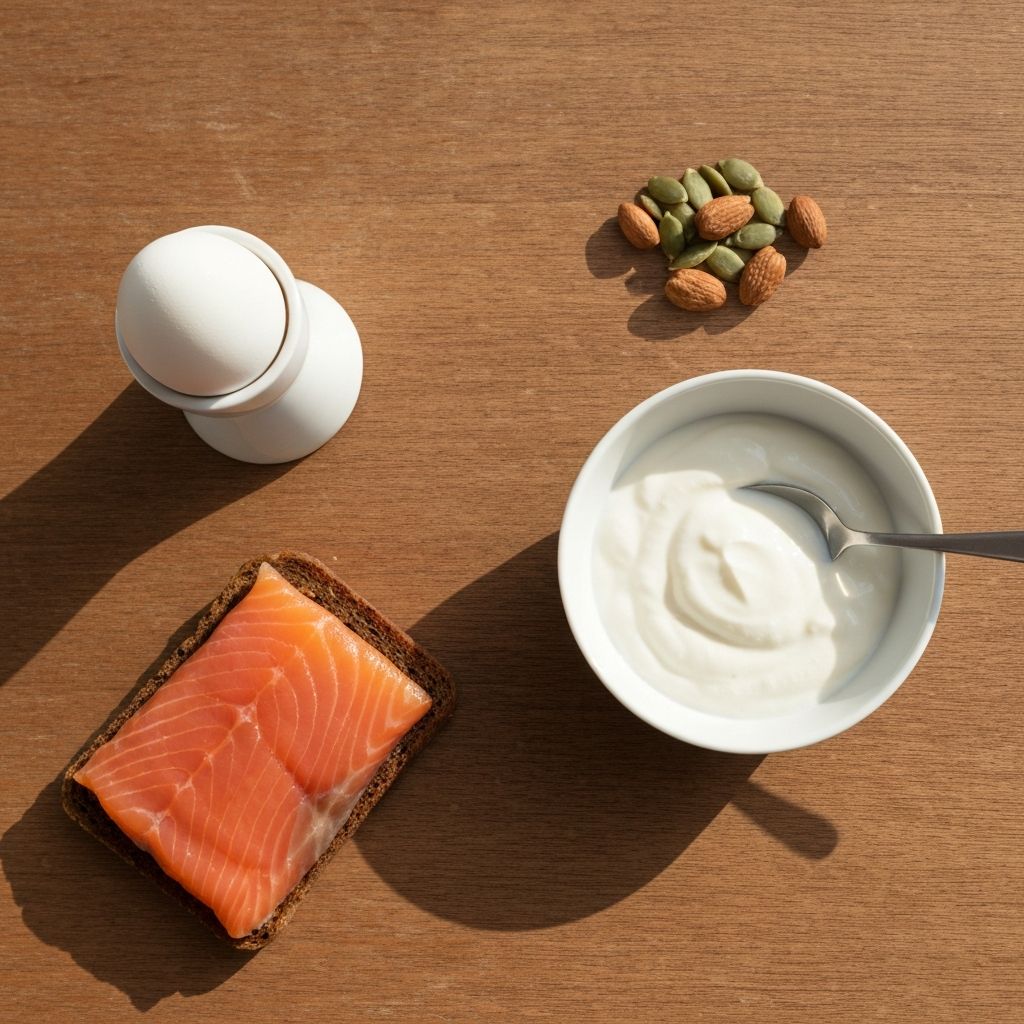
Eggs: A Versatile Protein Source
Protein content: Two medium eggs contain approximately 12 grams of protein.
Cooking method considerations: Boiling, poaching, and scrambling are common UK breakfast preparations. Cooking method does not substantially alter protein content per egg.
Context: Eggs are nutrient-dense, containing vitamin D, selenium, choline, and lutein in addition to protein. They represent a complete protein source (containing all essential amino acids).
Smoked Salmon: A Concentrated Protein Option
Protein content: 100 grams of smoked salmon contains approximately 20 grams of protein.
Typical breakfast portion: A breakfast serving typically measures 50 to 100 grams, delivered on wholegrain or rye bread.
Context: Smoked salmon delivers high protein density (protein relative to portion weight). It also contains omega-3 fatty acids and B vitamins. The sodium content reflects the smoking preservation method.
Greek-Style Yoghurt: A Protein-Rich Dairy Option
Protein content: 150 grams (a typical breakfast serving) of plain Greek yoghurt contains approximately 15 to 20 grams of protein.
Plain versus flavoured: Plain Greek yoghurt delivers consistent protein and minimal added sugar. Flavoured varieties often contain added sugars that increase overall carbohydrate and caloric content per serving.
Context: Greek yoghurt is strained, concentrating protein relative to standard yoghurt. It contains probiotics (beneficial bacteria) in unflavoured varieties, though evidence for probiotic function in individuals remains mixed.
Nuts and Seeds: Concentrated Protein and Fat Sources
Protein content: A small handful of almonds (approximately 30 grams) contains roughly 6 grams of protein. Mixed seeds (1 tablespoon or 15 grams) deliver approximately 3 grams of protein.
Energy density: Nuts and seeds are energy-dense foods, delivering significant calories per gram due to high fat content. Portion control is typical in breakfast contexts, as nuts and seeds serve as components rather than primary protein sources.
Context: Nuts and seeds provide plant-based protein alongside fibre, vitamin E, and polyunsaturated fats. They are commonly added to yoghurt or oats rather than consumed as standalone breakfast items.
How Breakfast Protein Influences Satiety
Laboratory studies examining breakfast composition have documented several mechanisms by which protein influences morning satiety:
- Gastric emptying: Protein slows the rate at which the stomach empties into the small intestine, extending the duration of meal presence in the digestive tract.
- Hormone signalling: Protein intake stimulates release of satiety hormones including peptide YY (PYY) and glucagon-like peptide-1 (GLP-1), which signal fullness to the brain.
- Subjective fullness: In short-term controlled studies, participants consuming higher-protein breakfasts report extended feelings of fullness and reduced next-meal hunger compared to lower-protein alternatives.
Important note: These mechanisms have been observed in laboratory settings. Individual responses vary widely based on metabolic factors, prior eating behaviour, activity level, and other contextual factors.
Portion Norms and Everyday Breakfast Context
UK breakfast protein portions reflect household and individual preference:
- Eggs: 2 medium eggs represent a common serving
- Smoked salmon: 50 to 100 grams on bread
- Greek yoghurt: 150 to 200 grams in a bowl
- Nuts/seeds: Small handful (25 to 30 grams) as an addition to other foods
These portions deliver varying absolute amounts of protein (ranging from 6 to 20 grams per serving) while fitting comfortably within everyday breakfast composition patterns.
Complete vs Incomplete Protein at Breakfast
Complete proteins contain all nine essential amino acids. Eggs and smoked salmon are complete proteins. Plant-based breakfast proteins (nuts, seeds, legumes if included) are incomplete, lacking certain essential amino acids in sufficient quantity.
In everyday breakfast contexts, incomplete plant proteins can be combined with other foods (such as seeds with wholegrain bread) to provide complementary amino acid profiles, though this combination need not occur within a single meal.
Individual Responses to Breakfast Protein
While controlled research documents general satiety effects of breakfast protein, individual responses vary widely. Factors influencing individual responses include:
- Metabolic rate and energy expenditure patterns
- Prior eating behaviour and learned dietary habits
- Physical activity level and exercise timing
- Hormonal factors including insulin sensitivity
- Digestive tolerance and individual satiety hormone sensitivity
No protein quantity or source universally produces identical satiety responses across all individuals.
Conclusion
Common UK breakfast protein sources—eggs, smoked salmon, Greek yoghurt, nuts, and seeds—deliver varying amounts of protein in typical portions, ranging from 6 to 20 grams per serving. Laboratory research documents physiological mechanisms by which protein influences gastric emptying and satiety hormone release, yet individual responses remain variable.
Understanding protein content and physiological context supports informed everyday breakfast choices without prescribing any specific protein source or quantity as universally optimal.